
Early Alert Canines (EAC) improves the health, safety, and well-being of people with insulin dependent diabetes by partnering them with certified low-blood sugar alert Service Dogs. Dogs are well known for their highly acute sense of smell and we know that dogs can detect hypoglycemic episodes in humans. But can they detect when someone is infected with #COVID19? If so, how? In general, dogs have 300 million smell receptors, compared to 6 million in humans. The olfactory bulb is the area of the brain used to process all of the information a dog can extract from odor. One-eighth of a dog’s brain is dedicated to interpreting odor, which is 40 times larger than the same area in the human brain. Dogs are used to detect explosives for military operations, illicit drugs, and weapons for police and search and rescue missions. In the medical field, dogs are used for a variety of purposes like cancer detection, diabetes monitoring, and infectious disease screening.
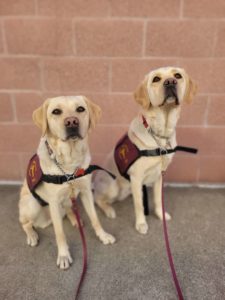 In 2021, EAC successfully partnered with the CDC Foundation and the California Department of Public Health (CDPH) in a pilot program to train COVID-19 Medical Detection Dogs. The goal of this program was to prove that dogs are able to identify possible COVID-19 infections with accuracy that is similar to, or better than, rapid tests. The dog is trained to detect the odor of the Volatile Organic Compounds (VOCs) that are produced by a person infected with COVID-19. VOCs are constantly emitted by humans and the training process includes the use of clothing worn by people who tested positive for COVID-19. This program was designed to alleviate some of the stress on the testing system by replacing some rapid tests in school settings, as a tool for screening. Laboratory testing follows rapid tests to confirm testing status once a dog identifies a potential positive. Training a working dog is based upon positive reinforcement, where food and play are the rewards. Humans and dogs work together as partners, and the Handler is trained in dog communication and body language. They ensure that the dog is safe and well cared for. These highly trained dogs can screen exponentially more individuals than lab-based tests can in the same amount of time.
The project is continuing to a new phase with the goal of further exploring ways in which dogs can safely and productively help with the fight against infectious diseases and the protection of our community. EAC relies upon the generosity of people who provide a foster home for the dogs in training. If you are interested in taking a tour or learning more about how to get involved, visit www.EarlyAlertCanines.org or find them on Facebook and Instagram.
By Victoria Briskin, Early Alert Canines Development Director Photo provided by EAC